Best Screen Printing Emulsion: Diazo vs. Dual-Cure vs. Photopolymer
Choosing the best screen printing emulsion is an important part of building a reliable screen room process. The right emulsion affects stencil durability, image definition, exposure speed, reclaiming, and how consistently you can produce quality screens from job to job.
If you are comparing diazo, dual-cure, and photopolymer emulsions, there is no one-size-fits-all answer. The best choice depends on the type of ink you use, the detail level of your artwork, your exposure unit, your production speed, and even your shop environment.
Some emulsions are more forgiving and easier for beginners to manage. Others offer faster exposure, sharper detail, longer shelf life, or better compatibility with modern equipment like LED exposure units and CTS (computer-to-screen) systems.
This guide breaks down the differences so you can choose the right emulsion for your workflow.
What Is Screen Printing Emulsion?
Screen printing emulsion is a light-sensitive coating applied to mesh to create a stencil. After coating and drying the screen, you place your film positive over it and expose it to light. The emulsion hardens in the exposed areas, while the unexposed image area washes out and creates the printable stencil.
The emulsion you choose can affect:
- Exposure speed
- Image detail and edge definition
- Stencil durability on press
- Resistance to water-based and solvent-based inks
- Ease of reclaiming
- Coating behavior and stencil build
- Compatibility with exposure equipment
- Consistency in changing shop conditions
That is why emulsion choice matters. It is not just about getting an image to wash out. It is about getting a stencil that works well for your particular process.
Quick Answer: Which Screen Printing Emulsion Is Best?
A simple way to think about it is this:
- Diazo emulsions are generally more forgiving and are often used by beginners or for specific needs such as water or solvent resistance.
- Dual-cure emulsions are often the best all-around choice because they offer a wider range of ink resistance, good definition, and more exposure latitude.
- Photopolymer emulsions expose the fastest, are convenient because they do not require mixing, and can achieve excellent detail, but they need to be dialed in more carefully.
For many shops, dual-cure emulsions are the most versatile overall choice. For faster production and no mixing, photopolymers are attractive. For newer printers or specialized applications, diazo still has its place.
The Main Types of Screen Printing Emulsion
The three main categories are:
- Diazo
- Dual-cure
- Photopolymer
It is worth noting that terminology in the industry can sometimes overlap.
SBQ (Styryl Basolium Quaternary) emulsions are often referred to as pure photopolymers. Some manufacturers may also use terms like photopolymer dual-cure or SBQ dual-cure for products that combine photopolymer chemistry with diazo. Because of that, it is always important to read the product description and intended use rather than relying only on the label.
Diazo Emulsion
Diazo emulsions have been used in screen printing for a long time. They require the addition of a diazo sensitizer before use, so there is a mixing step involved.
After mixing, the emulsion should be allowed to rest before use so trapped air bubbles can dissipate. If you coat screens immediately after mixing, those bubbles can contribute to pinholes and other stencil defects.
Pros of Diazo Emulsion
- More forgiving exposure characteristics
- Often a good choice for beginners
- Can offer useful water or solvent resistance in certain formulas
- Good option when ease of use matters more than speed
- Generally cost less on average
Cons of Diazo Emulsion
- Requires mixing before use
- Needs time to rest after mixing before coating
- Slower exposure times
- Shorter shelf life once sensitized
Shelf Life of Diazo Emulsion
Once sensitized, diazo-based emulsions generally have a shelf life of about 4 to 6 weeks, depending on storage conditions and the specific product.
Best Uses for Diazo Emulsion
Diazo is not used as much in screen printing as it once was. Today, it is often considered more of a beginner’s emulsion or a product chosen for certain specific properties, such as water or solvent resistance.
It can still be a very practical choice when a shop wants a more forgiving emulsion and is less concerned with the fastest possible exposure speed.
Best for:
- Beginners
- Shops still learning exposure
- Certain specialty applications
- Printers who value forgiveness over speed
Dual-Cure Emulsion
Dual-cure emulsions combine diazo chemistry with photopolymer chemistry. In practice, they often offer one of the best balances of durability, definition, and exposure latitude.
This is why some higher-quality emulsions on the market fall into the dual-cure category.
Pros of Dual-Cure Emulsion
- Often offers a wider range of ink resistance
- Usually better suited for varied shop use
- More forgiving exposure latitude than pure photopolymer
- Higher-quality dual-cures can hold excellent image definition
- Easier to maintain consistent quality across different jobs
- Good balance of detail, durability, and usability
Cons of Dual-Cure Emulsion
- Always requires sensitizing
- Needs time to rest after mixing so bubbles can dissipate
- Shorter shelf life after sensitizing than photopolymers
- Exposure is generally slower than pure photopolymer, sometimes by 4 to 8 times
Shelf Life of Dual-Cure Emulsion
Like diazo-based emulsions, dual-cure emulsions generally have a shelf life of about 4 to 6 weeks after sensitizing.
Best Uses for Dual-Cure Emulsion
Dual-cure emulsions are often chosen for resistance, broader ink compatibility, and higher overall performance. A quality dual-cure can offer excellent stencil definition while also being easier to hold consistently because of its broader exposure latitude.
That makes dual-cure one of the best options for shops that want strong overall performance without giving up too much forgiveness.
Best for:
- Shops running a variety of jobs
- Printers needing broader ink compatibility
- Shops wanting better resistance
- Users who want strong detail with more manageable exposure latitude
Photopolymer Emulsion
Photopolymer emulsions, often called pure photopolymers or SBQ emulsions, are pre-sensitized. That means they do not require added diazo and do not require mixing before use.
That convenience is a major advantage in busy shops. You do not have to stop, mix emulsion, and then wait for it to rest before coating screens. For shops processing jobs quickly, that can make a real difference.
Pros of Photopolymer Emulsion
- No mixing required
- Ready to use out of the container
- Long shelf life
- Fastest exposure times
- Can achieve very high-quality image definition
- Useful for fast-moving production environments
- Often well suited to modern LED exposure units and some CTS workflows
Cons of Photopolymer Emulsion
- Less forgiving because it exposes so quickly
- Requires a dialed-in process
- More sensitive to overexposure and underexposure than slower, more forgiving emulsions
- Performance window can be narrow, especially with powerful LED units
Shelf Life of Photopolymer Emulsion
Photopolymer emulsions typically have a much longer shelf life than emulsions that require diazo to be added, often in the range of 12 to 24 months, depending on the product and storage conditions.
Ink Resistance and Hybrid Photopolymers
Pure photopolymers do not offer resistance to water-based or solvent-based inks on their own. To achieve resistance properties, additional chemistry must be added, creating what is often referred to as a hybrid photopolymer.
Hybrid photopolymers may be formulated for either water resistance or solvent resistance, but not both. Because of that, it is important to check the manufacturer’s specifications carefully and match the emulsion to the ink system being used.
For plastisol ink users, all three emulsion types can work well. Plastisol is generally the easiest ink system to work with from an emulsion standpoint. That is one reason many textile screen printers use photopolymer emulsions. They are fast, convenient, and well suited to production environments where speed matters.
Best Uses for Photopolymer Emulsion
Photopolymers are appealing for shops that want speed and convenience. Because they do not require mixing, they help streamline the screen room process. That can be a big advantage when jobs need to move quickly and consistently.
They can also achieve high-quality detail, but only if exposure is controlled carefully.
Best for:
- Faster-moving shops
- Ready-to-use convenience
- LED exposure units
- Certain high-detail applications
- Users with a tightly controlled exposure process
Why Exposure Speed Matters
One of the biggest differences between these emulsions is exposure speed:
- Diazo is slower and more forgiving
- Dual-cure offers a balance of speed and latitude
- Photopolymer is the quickest exposing
That quick exposure is one reason photopolymers can be harder to manage. If they are overexposed, you can lose fine detail. If they are underexposed, the stencil may break down on press. Either way, the result is lost quality and wasted time.
This is even more important today because newer LED exposure units can expose emulsions much faster than older metal halide systems. Some emulsions are specifically formulated for LED exposure, and some are better suited than others.
If a shop is using LED exposure and especially if it is trying to hold fine detail, the emulsion must be matched to the setup and exposure times need to be dialed in carefully.
Emulsions for LED Exposure Units and CTS Systems
Modern screen rooms are changing. LED exposure units and CTS systems have created new demands on emulsions.
Some emulsions are specifically designed for:
- LED exposure wavelengths
- Faster exposure cycles
- High-detail imaging
- CTS output characteristics
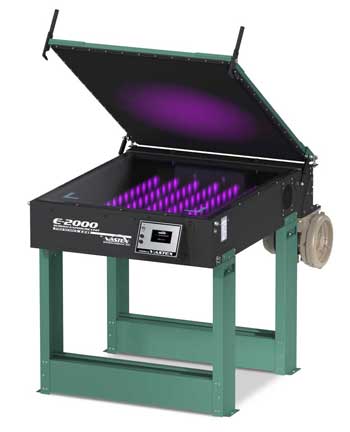
If you are running LED or CTS, not every emulsion will perform equally well. Some older or more general-purpose emulsions may still work, but certain products are built specifically for those systems and can produce better consistency and resolution. Emulsions such as Chromaline’s ChromaLime Emulsion have been specifically optimized for LED exposure units.
This is one of the reasons it is important to look beyond just the category name and check what the product is designed to do.
|
|
Shop Environment Matters More Than People Think
Your environment also plays a role in emulsion performance.
Humidity, temperature, and drying conditions all affect how emulsions behave. In some regions, or in shops that are not climate controlled, humidity resistance becomes very important.
A common problem in humid environments is that the film sticks to the emulsion, which can create imaging issues and inconsistencies.
In high-humidity shops, look for emulsions like BlueWorks Emulsion with built-in humidity resistance or use dehumidifiers and drying cabinets. Poor drying can also cause weak stencils regardless of emulsion type.
If your shop struggles with environmental control, that should absolutely be part of the emulsion decision.
Mixing and Resting Sensitized Emulsions
For diazo and dual-cure emulsions, mixing is part of the process.
After adding sensitizer:
- Mix thoroughly
- Allow the emulsion to rest before use
- Let trapped air bubbles dissipate
- Then begin coating screens
This resting period helps reduce the chance of pinholes caused by bubbles in the emulsion. In a busy shop, that extra step matters. It is one of the reasons pure photopolymer emulsions are attractive for faster workflows: they eliminate the mixing and waiting stage.
Solid Content and Reclaimability
When comparing emulsions, it is also worth considering solid content and ease of reclaiming.
Solid content affects how the emulsion coats the mesh and how much stencil build you get with each pass. In general, higher solids content can help build stencil thickness more quickly, which may be useful depending on the print application, mesh count, and desired ink deposit. It can also affect drying, coating feel, and overall stencil performance.
Reclaimability matters as well, especially in busy shops trying to move screens through production efficiently. In general, pure photopolymers that have not been modified for water resistance are often considered the easiest to reclaim. As emulsions are modified for greater durability and resistance, reclaiming can become more difficult. Dual-cure emulsions and more resistant formulas may offer better stencil performance, but that can sometimes come at the expense of easier reclaiming.
As with ink resistance, the exact reclaiming behavior depends on the specific product, how well it was exposed, the ink system used, and how quickly the screen is cleaned after printing.
How to Dial In Your Emulsion
No matter which type of emulsion you use, repeatable coating and exposure practices are essential for getting consistent results.
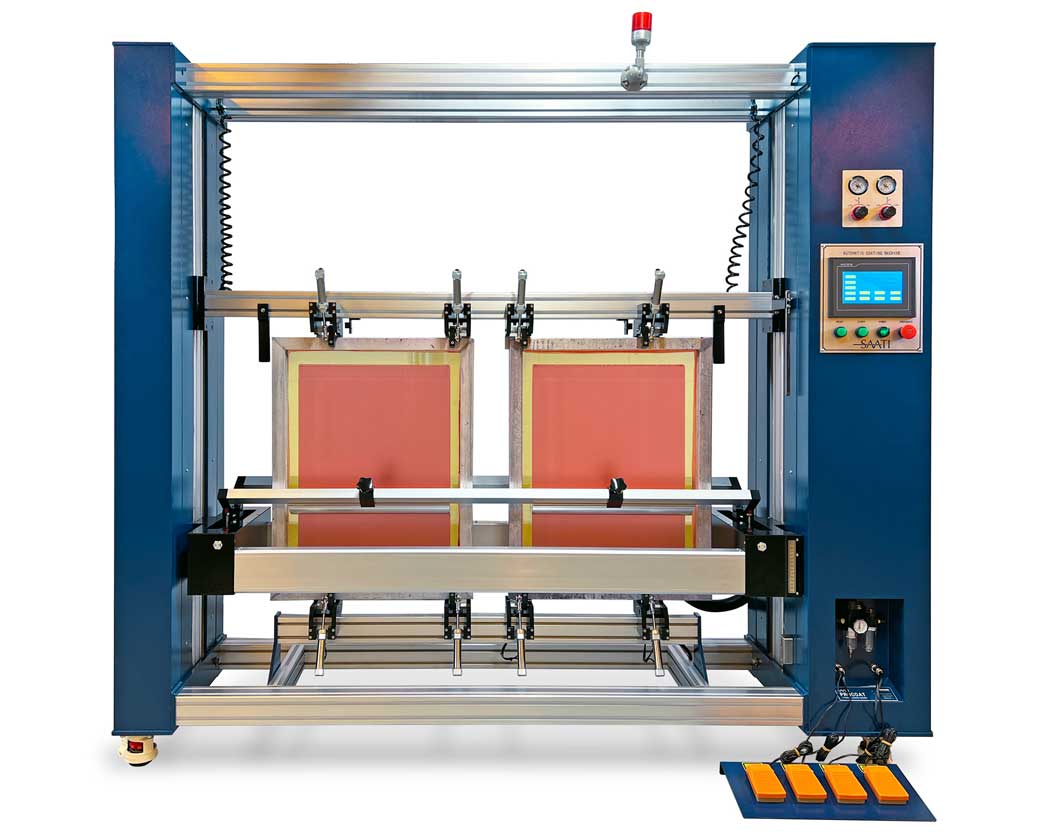
The first step is coating your screens the same way every time. Consistent coating is a major part of producing a quality stencil. Many screen printers use a 1-and-1 or 2-and-1 coating method, typically finishing on the squeegee side to help push the emulsion toward the print side. Larger shops may use semi-automatic or automatic coating machines to improve consistency even further.
Once your coating method is consistent, exposure testing becomes much more reliable. Exposure times can be established using a step wedge test or an exposure calculator. Periodic retesting is also a good idea to help maintain consistency over time.
Older fluorescent and metal halide exposure units were more likely to drift as bulbs aged and output weakened, causing exposure times to increase. LED exposure units are generally much more consistent and often have rated lifespans up to 50,000 hours. That consistency can make it easier to maintain repeatable results.
|
|
Mesh count and mesh color also affect exposure times. Lower mesh counts usually require longer exposure because the emulsion layer is thicker. Dyed mesh also takes longer to expose because it absorbs more UV light. That absorption helps reduce light scatter and undercutting, which is why higher mesh counts are often sold in dyed mesh.
It is a good idea to test the main mesh counts used in your shop, such as 110 white, 160 white, 180 dyed, 230 dyed, and 305 dyed. Once you understand those benchmarks, it becomes much easier to estimate exposure times for similar mesh counts and colors. Use our Screen Printing Mesh Count Guide to find out what mesh to use with your ink and design.
How to Choose the Best Emulsion for Your Shop
The best emulsion depends on how your shop actually operates.
Choose Diazo if:
- You want a more forgiving emulsion
- You are newer to screen making
- You need certain specialty resistance characteristics
- You are less concerned with maximum speed
Choose Dual-Cure if:
- You want the best balance of quality and forgiveness
- You print with a range of inks
- You need stronger resistance
- You want an emulsion that is easier to hold consistently across many jobs
Choose Photopolymer if:
- You want no mixing and faster workflow
- You need the fastest exposure times
- You are using LED exposure equipment
- Your process is controlled enough to dial in exposure accurately
Diazo vs. Dual-Cure vs. Photopolymer Comparison Chart
|
Diazo
|
Dual Cure
|
Photopolymer
|
| Mixing Required |
Yes |
Yes |
No |
| Exposure Speed |
Slowest |
Medium |
Fastest |
| Exposure Latitude |
Wide, forgiving |
Wide |
Narrow, needs precision |
| Shelf Life |
4–6 weeks after sensitizing |
4–6 weeks after sensitizing |
12–24 months, depending on product |
| Best For |
Beginners, specialty resistance |
Versatile jobs, ink variety |
High-volume, LED/CTS, detail |
| Ink Resistance |
Often water or solvent, depending on formula |
Broader in many formulas |
None in pure form; hybrid versions may be water-resistant or solvent-resistant depending on formulation |
Common Emulsion Problems
Regardless of type, emulsion problems usually show up in familiar ways.
Loss of Detail
Often caused by overexposure, especially with fast photopolymer emulsions.
Stencil Breakdown
Often caused by underexposure or choosing an emulsion that is not suited for the ink system.
Pinholes
Can be caused by dust, poor prep, or coating a freshly mixed emulsion before bubbles have had time to dissipate.
Film Sticking to Emulsion
Often related to humidity or improper drying conditions.
Final Thoughts
Diazo, dual-cure, and photopolymer emulsions each have a place in screen printing, but they are not interchangeable in every situation.
Diazo is slower and more forgiving, and still useful for beginners and certain specialty needs.
Dual-cure is often the most versatile and dependable option for a wide range of shops.
Photopolymer is fast, convenient, and capable of excellent detail, but it demands tighter control.
For many screen printers, a quality dual-cure emulsion remains a strong choice because it offers an excellent balance of resistance, usability, and image definition. At the same time, photopolymer emulsions are becoming increasingly popular because of their fast exposure times, ready-to-use convenience, long shelf life, and generally easier reclaiming. This is especially true when the photopolymer has not been modified for water resistance. The shift has grown even stronger with the wider adoption of LED exposure units as the primary exposure source in many shops. Diazo still has an important place for beginners and certain specialty applications.
The best emulsion is the one that matches your ink system, exposure equipment, shop environment, and workflow.
FAQ Section
What is the best screen printing emulsion?
The best screen printing emulsion depends on your workflow. Diazo emulsions are more forgiving and often better for beginners. Dual-cure emulsions are often the best all-around choice because they offer a balance of detail, durability, and broader ink compatibility. Photopolymer emulsions expose the fastest, require no mixing, and are popular in faster production environments.
What is the difference between diazo, dual-cure, and photopolymer emulsion?
Diazo emulsions require sensitizing, expose more slowly, and are generally more forgiving. Dual-cure emulsions also require sensitizing but offer a balance of durability, image definition, and exposure latitude. Photopolymer emulsions are pre-sensitized, expose the fastest, and are convenient for shops that want speed and no mixing.
Do dual-cure emulsions require sensitizing?
Yes. Dual-cure emulsions always require sensitizing.
Do photopolymer emulsions require mixing?
No. Pure photopolymer emulsions are pre-sensitized and do not require mixing before use.
Are pure photopolymers resistant to water-based or solvent-based inks?
No. Pure photopolymers do not offer resistance to water-based or solvent-based inks on their own. To gain resistance properties, additional chemistry must be added to create a hybrid photopolymer. These hybrid versions may be formulated for either water resistance or solvent resistance, but not both.
Which emulsion is best for LED exposure units?
Many photopolymer emulsions are well suited for LED exposure units because they expose very quickly and are often designed for modern exposure systems. Some emulsions, such as Chromaline’s ChromaLime Emulsion, are specifically optimized for LED exposure units. Some dual-cure emulsions may also work well, depending on the product and setup.
Which emulsion is easiest to reclaim?
In general, pure photopolymers that have not been modified for water resistance are often considered the easiest to reclaim. More durable or resistant emulsions can sometimes be harder to reclaim, depending on the formula, exposure, ink system, and cleanup practices.
What does solids content mean in emulsion?
Solids content affects how the emulsion coats the mesh and how much stencil build you get with each pass. Higher solids content can help build stencil thickness more quickly and may influence coating feel, drying, and overall stencil performance.
Why does film stick to emulsion in humid conditions?
Humidity can affect how emulsions dry and image. In shops with high humidity or poor environmental control, film can stick to the emulsion, causing imaging issues and inconsistencies. Emulsions with humidity resistance, along with drying cabinets or dehumidifiers, can help reduce the problem.
What is the shelf life of screen printing emulsion?
Diazo and dual-cure emulsions generally have a shelf life of about 4 to 6 weeks after sensitizing. Photopolymer emulsions often have a much longer shelf life, commonly in the 12 to 24 month range depending on the product and storage conditions.